February 2026 Sky Events: A Rare Cosmic Show
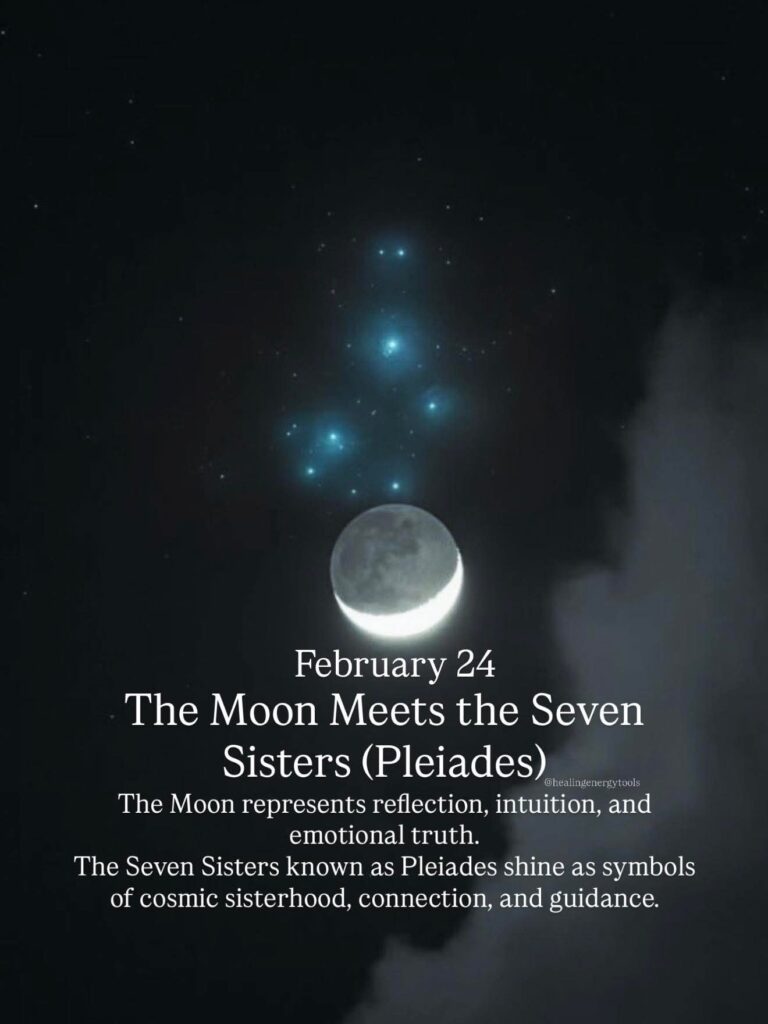
🌌 February 2026 Sky Events: A Rare Cosmic Show
February 2026 brings magic to the evening sky. The Moon dances with stars. Planets line up in beauty. It is a month for dreamers and sky lovers.
Let us explore this heavenly show step by step.
Moon meets Pleiades and planets align in Feb 2026. Discover dates, meanings, and how to watch this rare celestial show in the night sky.
🌙 My Love for the Night Sky
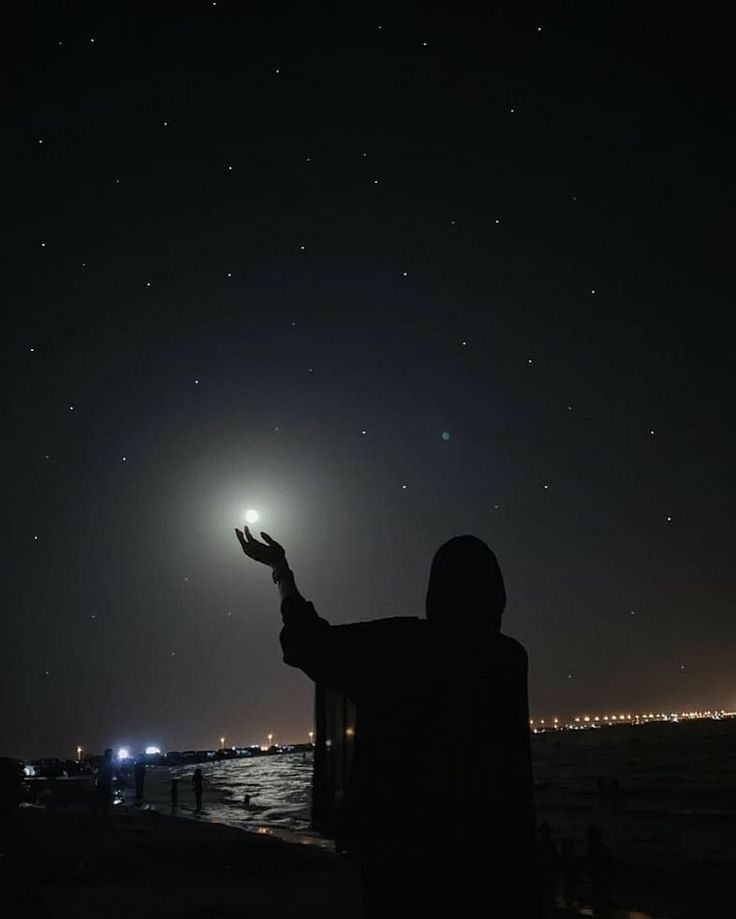
I truly love such natural and exceptional scenes in the night sky. The Moon, the stars, and the silent beauty of the universe always capture my heart.
Whenever I see the crescent Moon shining beside bright stars, I feel deeply connected to nature. These eye-catching views grab my attention instantly. They make me curious.
They make me wonder. I find myself looking up again and again. Searching for patterns, planets, and soft glowing light in the darkness. Events like the Moon meeting the Pleiades or a planetary parade are not just astronomical moments for me.
They are emotional experiences. I love nature. I love the stars. I love the peaceful night.
Every time the sky creates such magic, my interest grows even stronger. ✨
🌙 February 24 – Moon Meets the Pleiades
Crescent Moon glowing near a sparkling blue star cluster.
On February 24, the waxing crescent Moon passes in front of the Pleiades. It’s known as the Seven Sisters. This event is called an occultation. For a short time, the Moon hides some of the stars.
The Pleiades shine in the constellation Taurus.
They look like a tiny dipper of blue diamonds.
✨ Best time to watch: Just after sunset. 🔭 You may need binoculars for a clearer view. It is a moment of silence and wonder.
🌔 February 26 – Moon and Jupiter Align
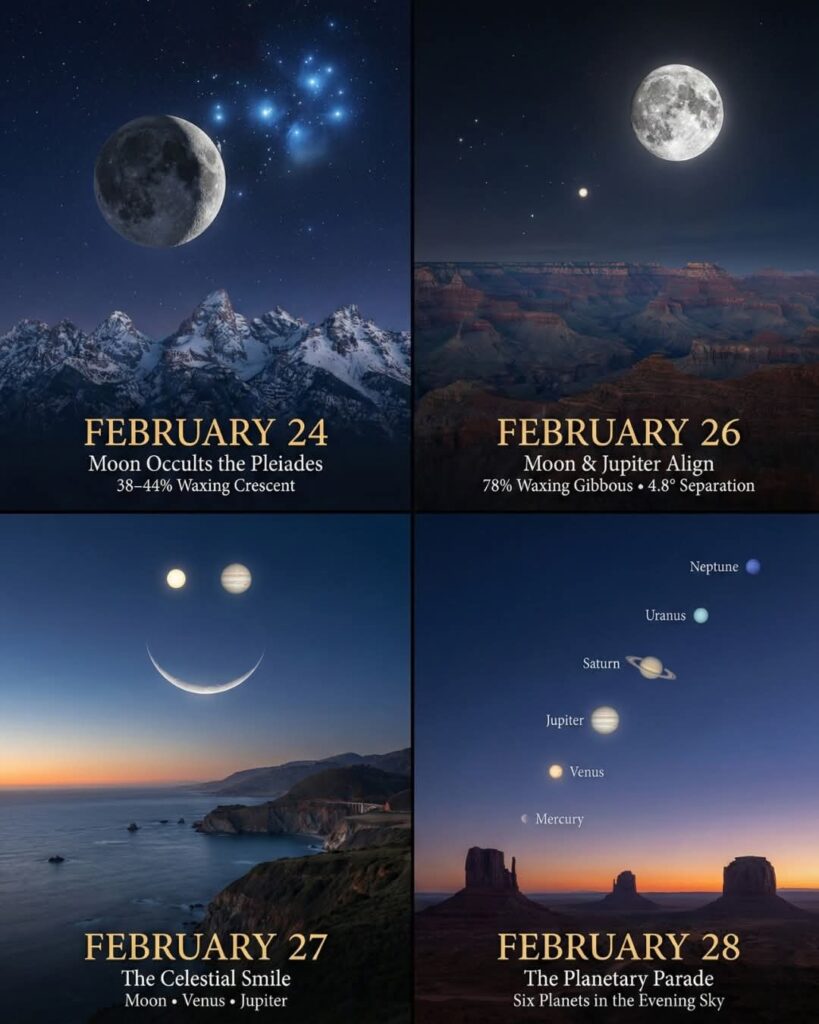
Bright Moon with a glowing star beside it over canyon cliffs. On February 26, the Moon moves close to Jupiter. Jupiter will appear as a bright golden star. The Moon will be 78% illuminated.
They will shine side by side. A beautiful pair in the dark sky.
No telescope is required. Just look up.
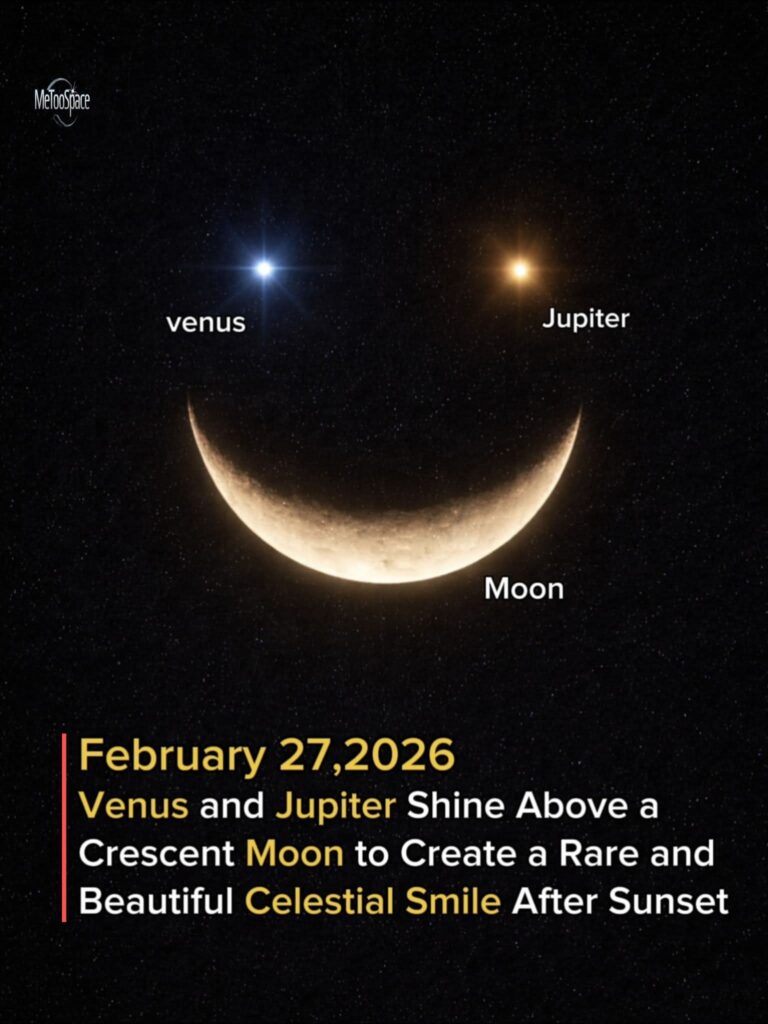
😊 February 27 – The Celestial Smile
Crescent Moon forming a smile under two bright planets. This is the most photogenic night. The crescent Moon aligns with Venus and Jupiter. Together, they form a smiling face in the sky. Children will love it. Photographers will wait for it.
It feels like the sky is smiling at Earth.
🪐 February 28 – The Planetary Parade
Line of planets glowing above desert landscape. On February 28, six planets appear in the evening sky:
Mercury, Venus, Jupiter, Saturn, Uranus, Neptune.
This is called a planetary parade.
Some planets will be visible to the naked eye. Others may require binoculars. It is rare. It is grand. It is unforgettable.
🔭 How to Watch These Events
Choose a dark place. Avoid city lights. Check the weather forecast.
Use a sky map app for direction. Arrive early and let your eyes adjust. Patience makes the sky clearer.
✨ Why This Month Matters The sky
connects us to something greater. It reminds us we are small, yet part of a vast universe. The Moon reflects light.
The stars reflect time. The planets reflect motion.
February 2026 is not just about astronomy. It is about wonder. So step outside. Look up. And let the universe tell its story.
✨ Conclusion: Do Not Miss the Magic
In the end, I truly believe such phenomenal and exceptional scenes of the starry night are gifts of nature. I deeply love watching these eye-gazing moments when the Moon shines beside bright stars and planets align like a fairy tale written across the sky.
These are not ordinary nights. They are rare. They happen quietly, and they pass quickly. That is why people should look up and witness them.
In a busy world, such celestial events remind us of beauty, peace, and wonder. They feel magical, yet they are real. I love watching them, and I believe everyone should take a moment to experience this natural miracle — because these rare moments may not return soon, and missing them means missing a piece of the universe’s living story.
References
- Wieczorek, Mark A.; Jolliff, Bradley L.; Khan, Amir; Pritchard, Matthew E.; Weiss, Benjamin P.; Williams, James G.; Hood, Lon L.; Righter, Kevin; Neal, Clive R.; Shearer, Charles K.; McCallum, I. Stewart; Tompkins, Stephanie; Hawke, B. Ray; Peterson, Chris; Gillis, Jeffrey J.; Bussey, Ben (2006). “The constitution and structure of the lunar interior”. Reviews in Mineralogy and Geochemistry. 60 (1): 221–364. Bibcode:2006RvMG…60..221W. doi:10.2138/rmg.2006.60.3.
- “Moon Fact Sheet”. NASA National Space Science Data Center. NASA. January 11, 2024. Archived from the original on April 2, 2019. Retrieved August 6, 2025.
- Lang, Kenneth R. (2011). The Cambridge Guide to the Solar System (2nd ed.). Cambridge University Press. ISBN 978-1-139-49417-5. Archived from the original on January 1, 2016.
- Morais, M. H. M.; Morbidelli, A. (2002). “The Population of Near-Earth Asteroids in Coorbital Motion with the Earth”. Icarus. 160 (1): 1–9. Bibcode:2002Icar..160….1M. doi:10.1006/icar.2002.6937. hdl:10316/4391.

External links
- Definitions from Wiktionary
- Media from Commons
- News from Wikinews
- Quotations from Wikiquote
- Texts from Wikisource
- Textbooks from Wikibooks
- Resources from Wikiversity
- Travel information from Wikivoyage


- NASA images and videos about the Moon Archived July 13, 2023, at the Wayback Machine
- Video (04:56) – The Moon in 4K (NASA, April 2018) on YouTube
- Find moonrise, moonset and moon phase for a location
Post Comment