China’s Dual Circulation Strategy Driving New Growth
China’s economic transformation is entering a more structured and innovation-led phase. From record-breaking Spring Festival consumption to vocational education reform and local business optimization in Shanghai. The country is strengthening its “dual circulation” development strategy to ensure long-term stability and sustainable growth.
1. Spring Festival Economy Strengthens Domestic
Demand The extended Spring Festival holiday once again highlighted the power of China’s domestic market. Tourism surged, retail sales climbed, cinemas filled, and online platforms reported record activity. Transportation networks, including high-speed rail and smart ticketing systems, handled massive passenger flows efficiently.
This surge in consumption demonstrates the strength of internal circulation — a key pillar of the strategy introduced by Xi Jinping. Domestic demand is increasingly serving as the primary driver of economic growth, reducing reliance on external volatility while maintaining global engagement.
The holiday economy not only boosted short-term spending but also reinforced consumer confidence, which remains essential for steady expansion.
2. Understanding the Dual Circulation Model
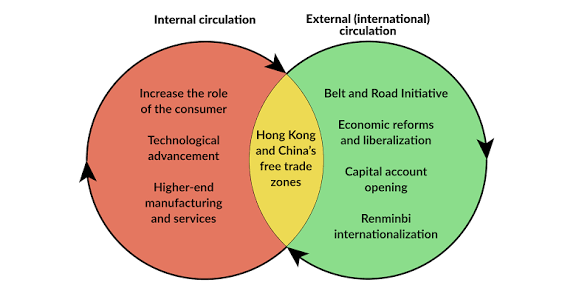
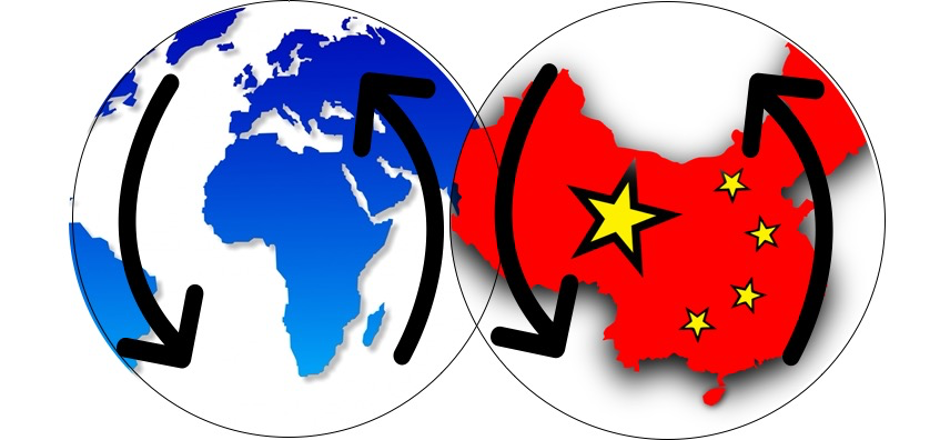
The dual circulation strategy focuses on two interconnected cycles:
Internal Circulation: Strengthening domestic production, distribution, and consumption.
External Circulation: Continuing openness to global trade, foreign investment, and international cooperation.
Rather than isolating the economy, this model enhances resilience. A strong domestic foundation enables China to engage globally from a position of stability and innovation.
3. Vocational Education Powering Industrial Upgrade
As China transitions toward high-tech and advanced manufacturing industries, vocational education has become a cornerstone of its growth blueprint.
Technical institutes are aligning programs with emerging sectors such as:
- Artificial intelligence
- Robotics and automation
- Renewable energy
- Advanced manufacturing
By connecting classroom training with enterprise partnerships, vocational schools are ensuring students graduate with practical, industry-ready skills. This approach reduces the skills gap and directly supports productivity improvements across sectors.
Human capital development is now viewed as one of the most critical long-term growth engines.
4. Shanghai’s Neighborhood-Level Business Reform

While national strategies set the direction, implementation happens locally. Shanghai has become a leading example of grassroots business reform.
Local authorities are:
- Simplifying licensing procedures
- Digitizing government services
- Supporting small and medium-sized enterprises (SMEs)
- Improving regulatory transparency
By focusing on neighborhood-level governance, Shanghai ensures that reforms are practical and accessible to entrepreneurs. This micro-level efficiency strengthens macro-level economic performance.
Innovation hubs and free trade zones within the city continue to test new policies that attract foreign investment and foster technological advancement.
5. The Synergy Between Skills and Business Environment
China’s growth momentum is not based on one single reform. Instead, it is the integration of multiple pillars:
- Strong domestic consumption
- Skilled workforce development
- Business-friendly governance
- Continued global openness
Vocational training supports industrial modernization, while business reforms create an environment where innovation can flourish. Together, these efforts enhance competitiveness and economic resilience.
Conclusion: A Structured Path Toward Sustainable Growth

China’s long Spring Festival holiday showcased consumer vitality. Vocational education reforms are preparing a skilled generation for the industries of tomorrow. Meanwhile, Shanghai’s localized governance improvements demonstrate how policy execution can drive tangible results.
Under the dual circulation framework, China is building an economy that is balanced, innovation-driven, and adaptable. By reinforcing internal strength while maintaining international engagement, the country is positioning itself for a stable and sustainable next phase of growth.

References
- Charles Riley; Sophia Yan (13 July 2015). “China’s stock market crash … in 2 minutes”. CNNMoney. Hong Kong. Archived from the original on 13 July 2015. Retrieved 13 July 2015.
- “SHCOMP Quote – Shanghai Stock Exchange Composite Index”. Bloomberg News.
- Duggan, Jennifer (8 July 2015). “Chinese stock markets continue to nosedive as regulator warns of panic”. The Guardian. Shanghai. Archived from the original on 9 July 2015. Retrieved 14 July 2015.
- “China bans major shareholders from selling their stakes for next six months”. The Guardian. Reuters. 8 July 2015. Archived from the original on 11 July 2015. Retrieved 13 July 2015.
- Hunt, Katie (9 July 2015). “Key things to know about China’s market meltdown”. Hong Kong: CNN. Archived from the original on 13 July 2015. Retrieved 13 July 2015.
- Gough, Neil (28 July 2015). “Chinese Shares Tumble Again”. The New York Times.
- Kaletsky, Anatole (12 October 2015). “China is Not Collapsing”. London: Project Syndicate. Retrieved 19 January 2016.
- Wildau, Gabriel (23 December 2015). “China stock market outperforms S&P despite wild swings: Market recovers from the travails of the summer but optimism is in short supply”. Financial Times. Shanghai. Retrieved 17 January 2016.
- Bradsher, Keith; Tsang, Amie (7 January 2016). “Stock Markets Shudder After Chinese Stock Plunge Forces a Trading Halt”. The New York Times. Retrieved 7 January 2016.
- Lahart, Justin (15 January 2016). “Why This Market Meltdown Isn’t a Repeat of 2008: U.S. economy and financial system are in a very different place now”. The Wall Street Journal. Retrieved 15 January 2016.
See also
External links
- Quotations related to Reform and opening up.

1 comment